
YOUR TYPE VOICE
You’ve learned to see type, understand it, feel it, and read it in the world around you. Now comes the most exciting part: discovering what type says about YOU.
CORE CONCEPT
IMPORTANCE OF YOUR TYPE VOICE
KEY KNOWLEDGE
1
Your type voice is your personal sense of typographic style: which typefaces, spacings, and arrangements resonate with you

REAL WORLD EXAMPLE
Scroll through your phone screenshots. The posts you saved. The designs you liked. The aesthetics you gravitated toward. Look at the typography — not the images, not the colours, just the type. You'll find patterns. Maybe you keep saving things with bold, tight, condensed type. Maybe you always stop at designs with thin, airy, elegant lettering. Maybe you're drawn to hand-lettered, imperfect type that feels human. Those patterns are your type voice forming — your personal taste in typography becoming visible through repetition. You didn't study it. You didn't decide it. But it's there. Just like you have a music taste that's uniquely yours, you have a type taste that's quietly been developing in every design you've admired and every post you've saved. Your type voice is already speaking. You just need to listen.
2
It develops through observation (noticing type in the world) and experimentation (trying different type choices)

REAL WORLD EXAMPLE
A music taste doesn't develop by listening to one song. It develops by hearing hundreds of songs, noticing which ones you replay, and eventually understanding why. Type voice works the same way. Observation is the listening phase — noticing typography on every shop sign, app screen, movie poster, and book cover until your brain builds a massive internal library of "type I like" and "type I don't." Experimentation is the playing phase — picking typefaces for a school project, trying different sizes, testing what happens when you go bold versus light, serif versus sans-serif. The more you observe, the sharper your preferences become. The more you experiment, the more you discover what your hands want to create. Observation fills the library. Experimentation finds your voice in it.
3
Preferences reveal themselves: you might consistently be drawn to serif elegance, sans-serif minimalism, or expressive display type
REAL WORLD EXAMPLE
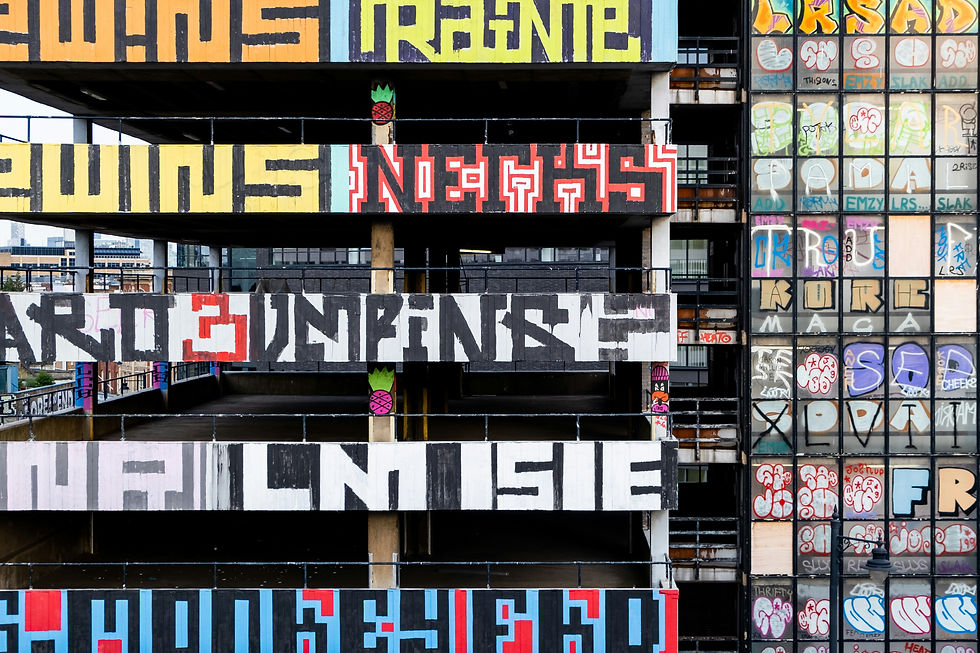
Over time, patterns emerge. One student realises they always gravitate toward clean, geometric sans-serifs — Futura, Montserrat, Poppins. Their work feels precise, modern, minimal. Another student consistently chooses warm serifs — Playfair Display, Lora, Merriweather. Their work feels literary, warm, editorial. A third student is drawn to bold display type — Impact, Anton, Bebas Neue. Their work feels loud, urgent, attention-grabbing. None of these preferences is better. They're all valid type voices. The important thing is recognising your pattern — because once you know your natural tendency, you can lean into it intentionally or consciously push against it when a project requires something different. Self-awareness is the first step to creative control.
4
A typographic portfolio piece demonstrates: a clear hierarchy, an intentional pairing, appropriate personality, and good spacing

REAL WORLD EXAMPLE
When a designer shows their work in a portfolio, the typography isn't background — it IS the work. A portfolio reviewer looks at a poster and checks: Is there a clear hierarchy? (Can I tell what's most important, second, third?) Is the typeface pairing intentional? (Do the heading and body types contrast and harmonise?) Does the type personality match the project? (Does a fun project use fun type?) Is the spacing professional? (Is the tracking, leading, and alignment all considered?) If all four are present, the portfolio piece says "this person understands typography." If any are missing, the piece says "this person picked a font from a dropdown menu." Everything you've learned in this subject — hierarchy, pairing, personality, spacing — converges in a portfolio piece.
5
Being able to articulate WHY you chose a typeface is as important as the choice itself — “I chose this because...” is a professional skill
REAL WORLD EXAMPLE
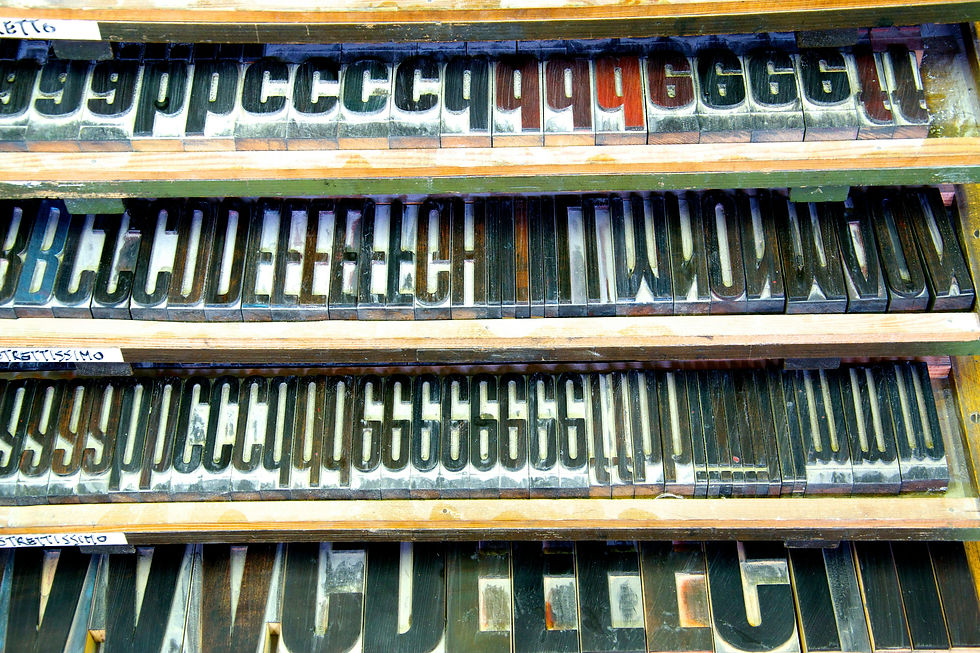
In every design job interview, at some point, the interviewer points to a typeface in the candidate's portfolio and asks: "Why this one?" The candidate who says "I don't know, it just looked good" reveals that they made the decision by instinct — which means they can't reliably repeat it. The candidate who says "I chose Playfair Display because the project is an editorial magazine about heritage crafts, and the high-contrast serif evokes literary tradition while the large x-height keeps it readable at body sizes" reveals that they understand what they did and why. Both candidates might have made equally good type choices — but only one can do it again, teach it to others, and defend it to a client. Articulation is the bridge between a good instinct and a reliable professional skill.
6
Type awareness is a permanent shift in perception — once you see type consciously, you notice it everywhere, forever
REAL WORLD EXAMPLE
Before this subject, you opened Netflix and saw movie titles. After this subject, you open Netflix and see: "That title card is set in a condensed, all-caps sans-serif with tight tracking — creates urgency. The description below is in Netflix Sans Regular with generous leading — comfortable for scanning. The category headers are in medium weight with extra tracking — clean separation." You didn't become a different person. You acquired a new layer of perception. And like learning to read, it doesn't switch off. Every restaurant you walk into, you'll notice the menu typography. Every poster you pass, you'll read the typeface before the words. Every app you open, you'll see the hierarchy before the content. This shift is permanent. And it's the most valuable outcome of this entire subject — the switch that turned you from a passive reader into an active typographic thinker.

7
Everything in this subject connects to the other Foundation subjects: type is visual (Visual Literacy), type uses colour (Colour, Light & Mood), type tells stories (Storytelling), type exists in spaces (Space, Scale & Form)
REAL WORLD EXAMPLE
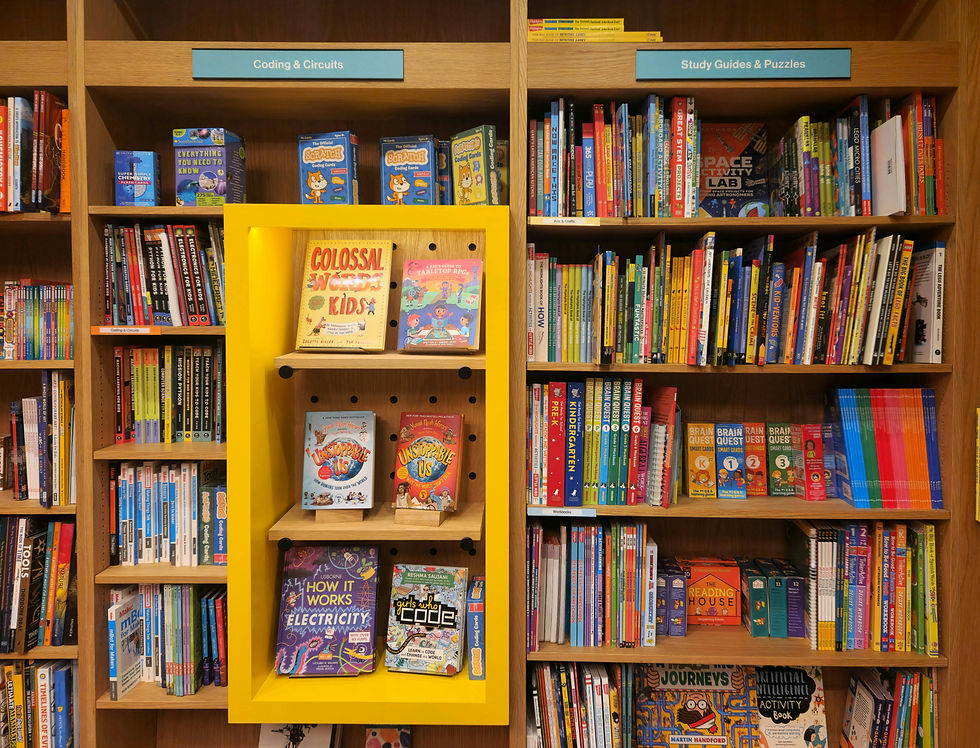
Walk into a well-designed bookshop. The signboard outside — that's typography in the environment (Space, Scale & Form). The curated colour of the text against the wall — that's type using colour (Colour, Light & Mood). The way the section headers guide your eye through the space — that's visual hierarchy (Visual Literacy). The quote painted on the back wall that makes you stop and think — that's type telling a story (Storytelling). One space, one experience, every subject from the Foundation Program visible at once. Your type voice doesn't exist in isolation. It works alongside your colour instincts, your compositional awareness, your storytelling ability, and your spatial intelligence. The Foundation subjects aren't eight separate files in your brain — they're one creative operating system, and typography runs through all of it.
8
Typography is a lifelong journey — even professionals with decades of experience continue to develop their typographic eye

REAL WORLD EXAMPLE
Massimo Vignelli was one of the greatest designers who ever lived. He designed the New York subway map and branding for companies across the world. He was famous for using only a handful of typefaces — sometimes just Helvetica — and he was still refining his typographic eye in his seventies. He would look at a page and notice a 0.5pt tracking issue that nobody else could see. Typography is not a subject you "complete." It's a practice you deepen. Every poster you analyse, every app you notice, every sign you photograph, every typeface you try in a project — each one sharpens your eye a little more. The student who starts today by noticing that a shop sign is serif while the one next door is sans-serif is taking the first step on the same journey that the world's greatest designers are still walking. The eye never stops learning. The type voice never stops developing.
Pro Connection
In portfolio reviews and job interviews, candidates are asked to walk through their typographic choices: “Why this typeface? Why this pairing? Why this spacing?” The ability to articulate type decisions separates junior from senior creatives. Your type voice will continue to develop throughout the Foundation Program and into the 12 EYEAM Club programs — but it starts here, with the awareness and vocabulary you’ve built in this subject.
PROFESSIONAL TERMINOLOGY
CLICK TO REVEAL and CLICK TO COVER
Your personal typographic style and preferences — the types, spacings, and arrangements you're drawn to
What is
TYPE VOICE
The consistent patterns in what type choices attract and resonate with you
What is
TYPOGRAPHIC PREFERENCE
A collection of typographic work or analyses that demonstrates your type awareness and skill
What is
TYPE PORTFOLIO
A typographic decision made deliberately and for a specific reason — not by default
What is
INTENTIONAL CHOICE
The ability to explain your creative choices clearly and persuasively using professional vocabulary
What is
ARTICULATION
THE DEVICE COMPARISON
The same website is living two completely different lives — one on your phone, one on a bigger screen. What exactly changed?
what TO DO
Open the same website on your phone and (if available) on a laptop or tablet screen.
Compare the typography carefully: is the text size different? Is the spacing different? Is the typeface the same?
If you only have a phone, try opening the same site in "desktop mode" vs standard mobile mode in your browser settings.
Write down 3 specific typographic differences you notice between the two views.
what TO SUBMIT
2 Screenshots | The same website in two different views (mobile vs desktop, or phone vs larger screen). |
Text | Your 3 typographic differences (be specific: size, spacing, weight, alignment). |
Text | One sentence: "The most noticeable change between screen sizes was [what] and I think that's because [reason]." |
CHALLENGE
DISCOVERY
You can use these SOFTWARES for this Discovery Challenge
FREE SOFTWARE : Pinterest, Phone Camera / Screenshot, Canva, Google Keep
PAID SOFTWARE : VSCO Membership, Procreate Pocket