
SHADOW AS DESIGN
Everyone notices light. The professional notices the shadow. That’s where the magic lives.
CORE CONCEPT
IMPORTANCE OF SHADOW AS DESIGN
KEY KNOWLEDGE
1
Shadow is not absence — it’s a creative element that creates form, mood, depth, and texture

REAL WORLD EXAMPLE
Look at any photograph by Fan Ho — the legendary photographer of Hong Kong street life. His images are defined not by what's lit, but by what's in shadow. A dark alleyway with a single figure in a pool of light. A staircase where the shadow pattern is more visually powerful than the stairs themselves. Shadow isn't the "leftover" where light didn't reach — it's an active design material. Just as a sculptor removes stone to reveal form, a photographer uses shadow to remove visual information and reveal only what matters.
2
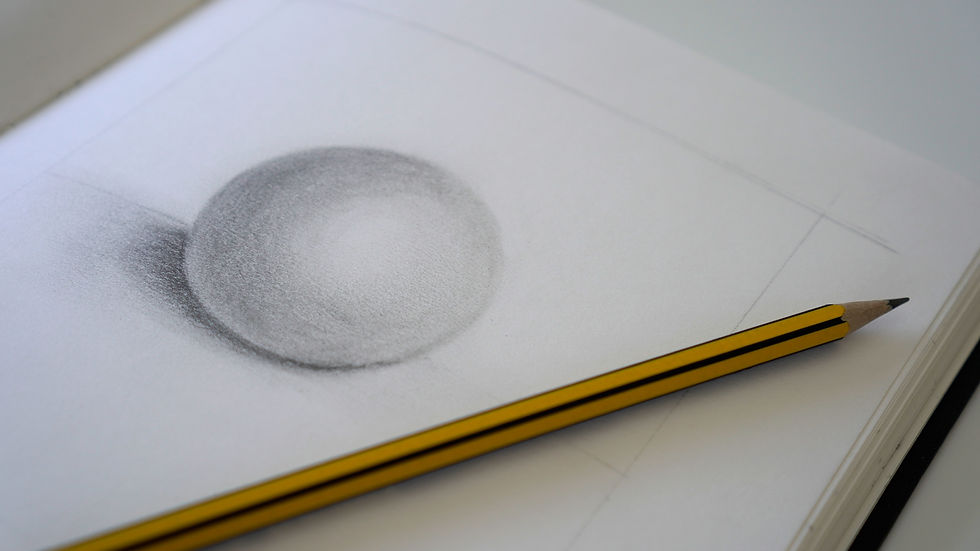
Shadows make flat things look three-dimensional: a circle becomes a sphere when shadow is added
REAL WORLD EXAMPLE
Draw a circle on a piece of paper. It's flat. A circle. Nothing more. Now shade one side gradually darker and leave a bright spot on the other side. Instantly, it looks like a ball — a three-dimensional sphere sitting on the page. This is the most fundamental drawing skill in the world, and it's based entirely on shadow. Every 3D rendering in every video game, every CGI movie, every product visualisation uses this principle: shadow creates form. Without shadow, the most expensive 3D render looks like a flat sticker. Shadow is what makes the fake look real.
3
Shadow depth sets mood: deep, dark shadows feel dramatic, mysterious, and cinematic. Gentle shadows feel calm and natural

REAL WORLD EXAMPLE
Compare two portrait photographs of the same person. In the first, the shadows are deep and dark — one side of the face falls into near-black shadow, the contrast is extreme, the mood is intense. It feels like a film noir poster. In the second, the shadows are gentle — a soft gradation from light to slightly darker, no area is truly dark, the mood is calm. It feels like a lifestyle magazine. The difference isn't the person, the camera, or the composition — it's the depth of the shadows. Deep shadow = drama. Gentle shadow = peace. Shadow depth is a mood slider.
4
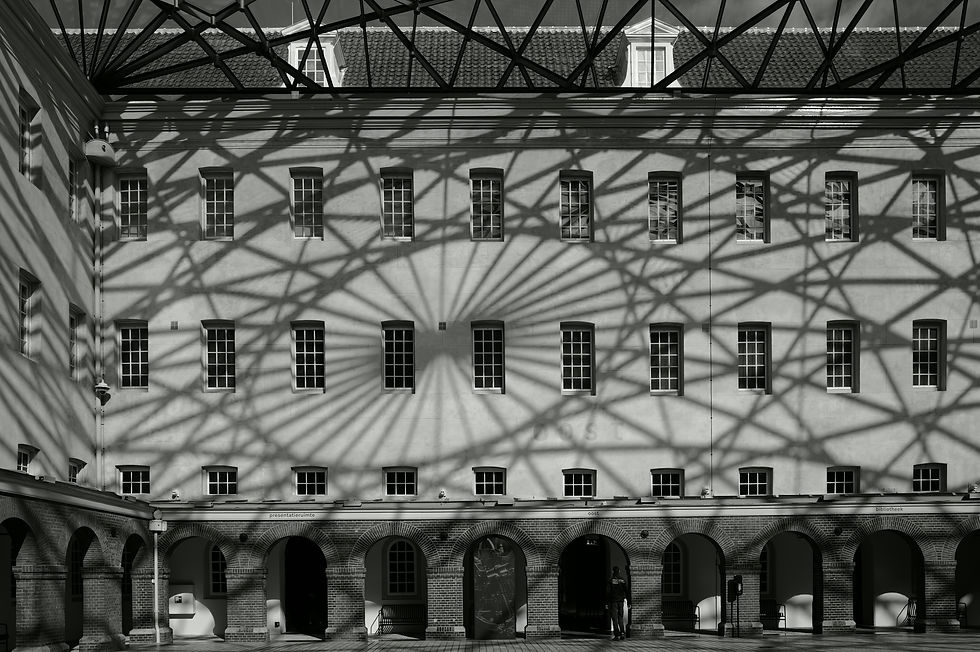
Shadow length tells time and angle: long shadows = low sun (early morning, late afternoon, dramatic). Short shadows = high sun (midday, ordinary)
REAL WORLD EXAMPLE
Architects and photographers obsess over shadow length because it tells the story of time. A photograph of the Qutub Minar with a long shadow stretching across the grass tells you it's golden hour — early morning or late evening. The long shadow adds drama, scale, and visual interest. The same monument at noon casts almost no shadow — it looks flat, ordinary, like a documentation photo. Shadow length is a free storytelling tool: long shadows say "magic hour, drama, beauty." Short shadows say "midday, routine, documentation." That's why professionals almost never shoot at noon.
5
Hard shadows (sharp edges) come from hard, direct light. They feel edgy, stark, and graphic
REAL WORLD EXAMPLE
Walk through a market at noon on a clear day. The tin roof of a stall casts a razor-sharp shadow on the ground — the edge between light and dark is like a line drawn with a ruler. Bottles on a shelf cast hard, defined shadow shapes. Everything feels high-contrast and graphic. Hard shadows are the visual equivalent of a staccato drum beat — sharp, precise, punchy. Graphic designers often use hard shadow aesthetics in poster design because they feel modern, edgy, and attention-grabbing. Hard shadows don't whisper — they snap.

6
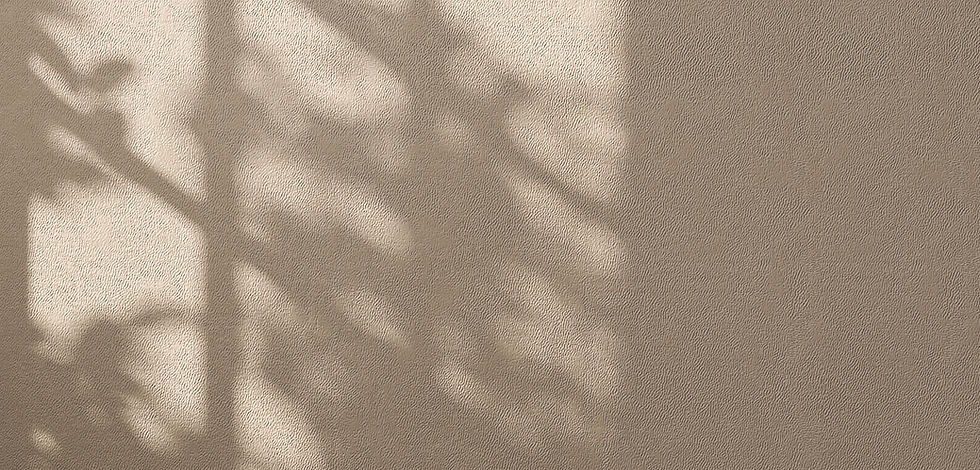
Soft shadows (gradual edges) come from soft, diffused light. They feel gentle, natural, and smooth
REAL WORLD EXAMPLE
On a cloudy day, look at any object's shadow. You can barely see it. The edges fade gradually from dark to light — there's no clear line where shadow ends and light begins. This is soft shadow, created by diffused light scattering in all directions. Soft shadows feel natural and gentle because cloudy days are common in our experience. Product photographers often create soft shadows deliberately (using large softboxes) because objects look more premium and approachable when they sit on soft, gradual shadows rather than hard, stark ones.
7
The eye naturally moves from shadow toward light — shadows can be used to direct attention

REAL WORLD EXAMPLE
Look at any spotlight display in a museum. The painting is lit. The wall around it is in shadow. Your eye goes straight to the painting — not because you were told to look there, but because your visual system is wired to follow light. Shadow becomes the frame, and light becomes the focal point. Cinematographers use this constantly: they darken everything except the character's face, and your eye automatically locks on. Interior designers use it too: a bright display table surrounded by dimmer surroundings draws customers to the products. Shadow guides; light attracts.
8
In graphic design, drop shadows add depth and separation between elements — one of the most common design tools

REAL WORLD EXAMPLE
Open any well-designed app on your phone. Notice the cards — those rectangular content blocks. They appear to "float" slightly above the background, casting a subtle shadow underneath. That's a drop shadow, and it's one of the most widely used design elements in digital interfaces. Without the shadow, the card would look flat and pasted onto the background. With the shadow, it gains depth — it looks like a physical card sitting above a surface. Google's Material Design system is built entirely on this principle: shadow = depth = hierarchy. The deeper the shadow, the higher the element appears.
Pro Connection
Photographers talk about “working the shadows” and “shadow detail” (how much you can see in the dark areas). Film colourists adjust “shadow tones” to control mood. Graphic designers debate whether drop shadows feel modern or dated. Interior designers place lights to create shadow play on textured walls. The professional eye sees shadow as an active creative material — not just the leftover space where light didn’t reach.
PROFESSIONAL TERMINOLOGY
CLICK TO REVEAL and CLICK TO COVER
An area where light is blocked by an object — a creative design element, not just an absence of light
What is
SHADOW
The shadow an object throws onto the surface around it — shows the direction and quality of the light source
What is
CAST SHADOW
The shadow on the surface of an object itself — what makes a flat shape look three-dimensional
What is
FORM SHADOW
The dramatic interplay of strong light and deep shadow — a classic artistic technique used in painting, photography, and film
What is
CHIAROSCURO
A digital shadow effect placed behind an element to create the illusion of depth and separation from the background
What is
DROP SHADOW
The brightest point on a surface where light hits most directly — the counterpart to shadow
What is
HIGHLIGHT
THE LIGHT JOURNAL
The same object. The same room. Three different times. Three completely different worlds. One afternoon is all it takes to experience what photographers spend entire careers mastering.
what TO DO
Choose one object or space you can photograph multiple times throughout the day.
Photograph it under 3 different light conditions — choose from: morning light, midday light, evening light, window light, overhead artificial light, phone flashlight.
Keep the framing and angle as similar as possible in each shot — only the LIGHT should change.
Compare all three. Notice how the mood, texture, and depth change with each light condition.
Label each photo with the light source/time and a mood word.
what TO SUBMIT
3 Photos | The same object or space photographed under 3 different light conditions. Label each with the light type (e.g. "morning window light," "midday overhead," "phone flashlight"). |
Text | For each photo: "[Light condition] — mood: [word or phrase] — what the light does to the subject: [observation]." Then: "My favourite light is [condition] because [reason]." |
CHALLENGE
DISCOVERY
You can use these SOFTWARES for this Discovery Challenge
FREE SOFTWARE : Phone Camera, Snapseed, VSCO, Google Keep
PAID SOFTWARE : VSCO Membership, Darkroom