
PLAYING WITH SCALE — WHEN BREAKING THE RULES IS THE RULE
What if making something impossibly big or absurdly tiny was the secret to the most memorable, most shared, most talked-about designs in the world?
CORE CONCEPT
IMPORTANCE OF PLAYING WITH SCALE — WHEN BREAKING THE RULES IS THE RULE
KEY KNOWLEDGE
1
Playing with scale means deliberately making things bigger or smaller than expected — creating surprise, wonder, or humour

REAL WORLD EXAMPLE
Remember those giant Amul butter hoardings where the Amul girl is 10 feet tall holding a butter packet the size of a car? She’s normally a tiny cartoon character, but at that massive scale on a billboard, she becomes a neighbourhood landmark. The oversized version makes you smile because your brain says “that’s NOT the right size!” and the surprise creates delight. That’s scale play — taking something familiar and putting it at an unexpected size to make people stop and look.
2
It works because the brain expects things to be a certain size — when that expectation is broken, attention spikes

REAL WORLD EXAMPLE
If someone texted you in the standard font size, you’d read it normally. But if one word in the middle was suddenly TEN TIMES BIGGER than the rest, your eye would jump to that word first — even if it wasn’t the most important word. Your brain flagged it because it broke the expected pattern. Advertisers use this trick constantly: one giant word surrounded by normal-sized text pulls your eye like a magnet. The unexpected size hijacks your attention. You can’t choose to ignore it.
3
Oversized elements create: drama, importance, impact, awe, or humour (a giant ice cream sculpture is funny; a giant monument is awe-inspiring)

REAL WORLD EXAMPLE
At airports and railway stations, the departure board is HUGE — sometimes 3 metres tall. It needs to be, because hundreds of people need to read it from far away. But the oversized scale also creates a feeling of importance: “This information matters. Pay attention.” Now imagine that same board was the size of your phone screen. You’d miss your flight because nobody would see it. Oversized design isn’t just about visibility — it’s about communicating that something is important enough to be big.
4
Miniature elements create: curiosity, preciousness, wonder, intimacy (tiny worlds, mini food, dollhouse-sized details)

REAL WORLD EXAMPLE
Have you seen those tiny food videos where someone cooks a real miniature dosa on a coin-sized tawa using a toothpick as a spatula? They go viral because the miniature size makes something ordinary feel magical. A regular dosa? Normal. A perfectly made dosa smaller than your thumbnail? Incredible. Miniature scale creates wonder because your brain says: “How is that even possible at that size?” Things that are impossibly small feel precious — like secrets only you can see.
5
Unexpected scale creates some of the most shareable content in the world — people love things that surprise them
REAL WORLD EXAMPLE
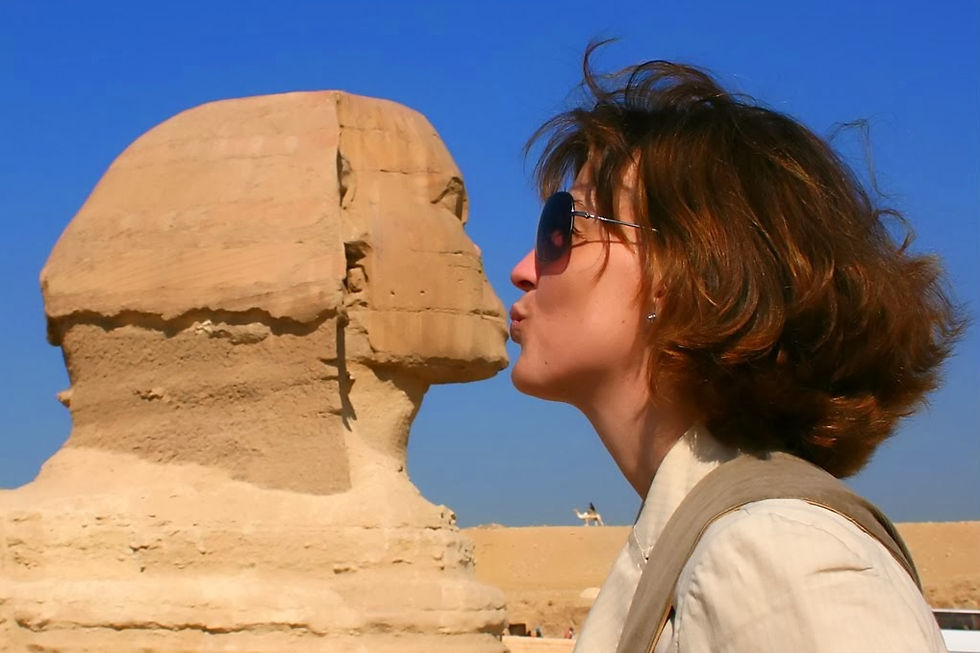
Those tourist photos where someone pretends to hold up the Taj Mahal in their palm or pinch the top of the Qutub Minar between their fingers? They’re one of the most shared types of photos on social media. The trick is simple — distance makes the building look small enough to hold. But the playfulness of “I’m holding a giant building” makes everyone smile. Scale play + humour = shareable. This is why creators who play with unexpected sizes always get more engagement.
6
Scale play is used in advertising (products at unexpected sizes), art (installations that transform spaces), film (visual effects), and social media (surprising visual content)
REAL WORLD EXAMPLE
If a student makes a poster where the heading is accidentally tiny and a random word in the middle is accidentally huge, it looks like a mistake. But if a professional designer makes the heading small and one powerful word ENORMOUS on purpose — with everything else perfectly balanced — it looks like a brilliant creative choice. The difference is intention. A cricketers’ bad shot and a deliberate reverse-sweep look completely different, even though the bat moves similarly. Knowing the rules makes breaking them powerful.

7
The key is INTENTIONAL play: random scale errors look like mistakes. Deliberate scale play looks like genius

REAL WORLD EXAMPLE
Hold a 1-rupee coin close to your eye with one arm. With the other arm, point at a friend standing 10 metres away. The coin looks bigger than your friend’s head! That’s forced perspective — objects near the camera look giant, objects far away look tiny. Filmmakers use this trick all the time: in Lord of the Rings, the hobbits look tiny next to Gandalf, but the actors are actually similar in height — one was just positioned closer to the camera. You can create the same magic with just a phone.
8
Breaking scale rules requires knowing the rules first — you need to understand normal scale before abnormal scale feels exciting

REAL WORLD EXAMPLE
A chef who makes a regular biryani every day can one day present a biryani inside a tiny edible cup as a fancy appetiser, and it’s brilliant — because everyone knows what biryani normally looks like, the miniature version feels special. But if someone who’s never cooked biryani before serves it in a random tiny cup, it just looks like they didn’t make enough food. You need to master the normal before the abnormal becomes art. Same with scale — learn normal sizes first, THEN play with them.
Pro Connection
Art directors use scale play to create campaign concepts that stop people in their tracks. Set designers build oversized or miniature props for film and advertising. Experience designers create installations where visitors interact with objects at surprising scales. When a creative says “let’s go BIG with this,” they’re not just talking about ambition — they’re often talking about literal scale.
PROFESSIONAL TERMINOLOGY
CLICK TO REVEAL and CLICK TO COVER
Deliberately making elements unexpectedly large or small for creative effect — surprise through size
What is
SCALE PLAY
When objects are shown at impossible or dreamlike sizes — creating a fantasy or otherworldly effect
What is
SURREAL SCALE
Placing contrasting elements side by side for effect — including contrasting scales
What is
JUXTAPOSITION
Large-scale artwork designed for a specific space — often using dramatic scale to transform the environment
What is
INSTALLATION ART
A photography trick that makes objects appear larger or smaller by positioning them at specific distances from the camera
What is
FORCED PERSPECTIVE
THE SCALE GAME
The same tiny object. Two photographs. Two completely different feelings. What if the secret to making something feel extraordinary is simply where you put the camera?
what TO DO
Find a small object — a coin, a key, a Lego piece, a bottle cap, anything compact.
Photograph it next to something VERY LARGE — a building, a tree, a wall, a large piece of furniture. The tiny object should look tiny in the big world.
Now photograph the same small object in EXTREME CLOSE-UP, so it fills the entire frame and looks enormous.
Compare the two photos: same object, completely different feelings.
Which photo is more interesting? Which makes the object feel more important?
what TO SUBMIT
2 Photos | Photo 1: the small object in a large environment (feeling tiny). Photo 2: the same object in extreme close-up (feeling large and detailed). |
Text | One sentence per photo: "In Photo 1, the object feels [tiny/insignificant/lost] because [reason]." "In Photo 2, the object feels [dominant/detailed/powerful] because [reason]." Then: "The more interesting photo is [1/2] because [personal observation]." |
CHALLENGE
DISCOVERY
You can use these SOFTWARES for this Discovery Challenge