
HUMAN SCALE — DESIGNED FOR BODIES
What if every chair, every doorway, every step, and every phone screen was designed around one thing: the human body? (Spoiler: it was.)
CORE CONCEPT
IMPORTANCE OF HUMAN SCALE — DESIGNED FOR BODIES
KEY KNOWLEDGE
1
Human scale = designing things in proportion to the human body so they feel comfortable, natural, and usable

REAL WORLD EXAMPLE
Your school desk is about 75 centimetres high. That’s not a random number — it’s the height where a seated 12-year-old’s elbows rest comfortably while writing. A desk for adults is slightly taller. A desk for kindergarteners is shorter. Every desk height was chosen to match the body that would use it. That’s human scale: designing objects to fit human bodies. When it’s right, you don’t even notice. When it’s wrong, your back hurts after ten minutes.
2
Chairs, tables, counters, doorways, stairs, handles, screens, and buttons are all proportioned to human dimensions

REAL WORLD EXAMPLE
Every staircase step in India is roughly 15–18 cm high. If someone built steps that were 40 cm high, you’d need to climb them like a ladder. If they were only 5 cm high, you’d need 200 steps to go one floor. The height of a step is designed for the average length of a human leg’s comfortable stride. Door handles are at waist height because that’s where your hand naturally falls. Light switches are at shoulder height because that’s where your arm reaches easily. Everything around you is calibrated to your body.
3
When things match human scale, the experience feels effortless. When they don’t, it feels uncomfortable or impossible

REAL WORLD EXAMPLE
Try drinking chai from a cup made for dolls — your fingers can’t grip it. Now try drinking from a bucket — you’d spill everything. A regular chai cup fits perfectly in your hand because it’s designed for human fingers, human lips, human mouth size. You never think about it because it works. That’s the magic of human scale done right: it’s invisible when it’s correct. You only notice human scale when it’s WRONG — when the chair is too tall or the button is too small to tap.
4
Ergonomics is the study of designing things to fit human bodies — it applies to everything from office chairs to app interfaces

REAL WORLD EXAMPLE
Gaming chair companies spend months testing how backs curve, how arms rest, and where necks tilt. They build chairs that match the shape of a human spine so gamers can sit for hours without pain. That field of study is called ergonomics — the science of making things fit bodies. It’s not just chairs: the curve of a phone’s edges, the angle of a laptop screen, even the spacing of keys on a keyboard — all ergonomic decisions. Every comfortable object you own was shaped by someone who studied how bodies work.
5
On screens, touch targets (buttons, links) must be large enough for a fingertip (about 44–48 pixels minimum) — that’s human scale in digital design
REAL WORLD EXAMPLE
Ever tried to tap a tiny link on a website that wasn’t designed for mobile? Your finger covers three links at once and you always tap the wrong one. That’s a human scale failure on screen. Apple’s design guidelines say every button must be at least 44 pixels wide — roughly the size of an adult fingertip. That number wasn’t chosen by a computer. It was chosen by measuring actual human fingers and ensuring the button is big enough for the clumsiest thumb to hit it accurately.

6
In architecture, ceilings, corridors, and room proportions are designed around how humans move, see, and feel in space
REAL WORLD EXAMPLE
Walk into a Montessori school and everything looks miniature: tiny chairs, low tables, shelves at knee height, coat hooks at waist height. That’s not cute decoration — it’s deliberate human scale design for 3-to-5-year-old bodies. A 4-year-old can’t reach a shelf at adult height. They can’t climb onto a standard chair. The whole environment is rescaled for smaller humans. Similarly, kids’ apps have bigger buttons and simpler interfaces because small fingers need more room.

7
Children need different scale than adults: smaller chairs, lower shelves, bigger buttons — human scale changes with age and ability
REAL WORLD EXAMPLE
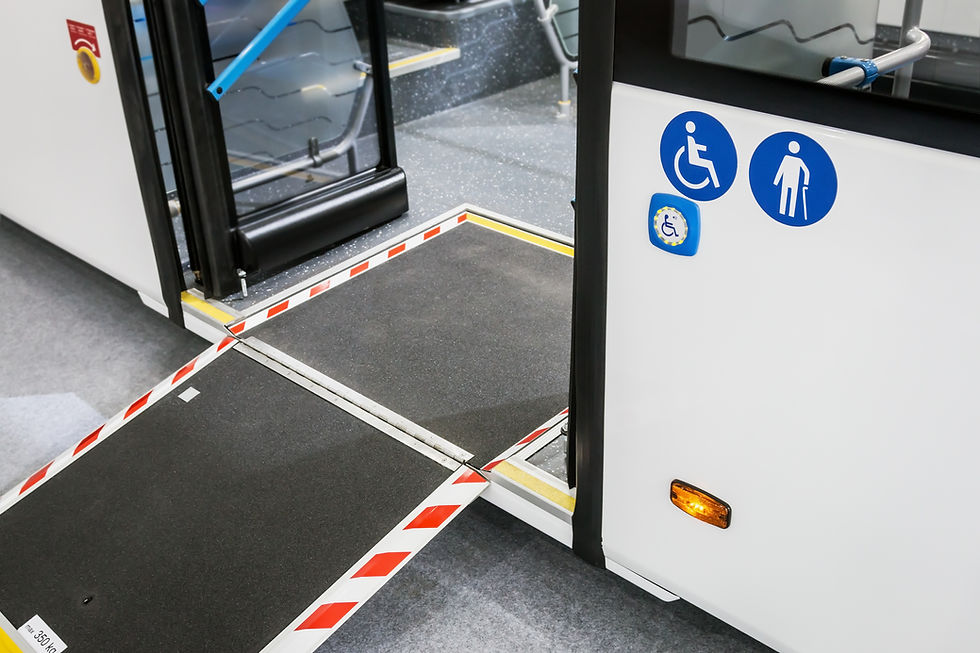
A ramp next to stairs is human scale design for someone in a wheelchair. A Braille sign next to a printed sign is human scale for someone who can’t see. A large-font setting on your phone is human scale for someone with weak eyesight. Accessible design means asking: “Does this work for ALL human bodies, not just average ones?” Designers who think about accessibility design for the widest range of humans — and that makes the design better for everyone, not just the people who need it most.
8
Accessibility means ensuring human scale works for all bodies: wheelchair users, people with visual impairments, elderly people, children

REAL WORLD EXAMPLE
Early smartphones were tiny — 3.5-inch screens. Then they got bigger: 5 inches, 6 inches, 6.7 inches. But they stopped around 7 inches. Why? Because a phone bigger than that doesn’t fit in a pocket or a hand. And a phone smaller than 4 inches is too hard to read. The screen size is a negotiation between your hand’s grip, your pocket’s depth, and your eyes’ reading distance. Every phone size is a human scale compromise between three body measurements.
Pro Connection
Interior designers specify furniture dimensions based on ergonomic standards. Product designers prototype at actual size to test human scale. UX designers follow touch target guidelines to ensure buttons are tappable. Architects use standard human dimensions for doorways, corridors, and ceiling heights. When someone says “it doesn’t feel right,” the issue is often a human scale problem.
PROFESSIONAL TERMINOLOGY
CLICK TO REVEAL and CLICK TO COVER
Designing things in proportion to the human body — ensuring comfort, usability, and natural interaction
What is
HUMAN SCALE
The science of designing things to fit the human body — maximising comfort, efficiency, and safety
What is
ERGONOMICS
The tappable area of a button or link on a screen — sized for a human fingertip
What is
TOUCH TARGET
Designing so that spaces, products, and experiences work for people of all abilities and body types
What is
ACCESSIBILITY
The study of human body measurements — used by designers to determine correct proportions for furniture, spaces, and products
What is
ANTHROPOMETRICS
THE SCALE GAME
The same tiny object. Two photographs. Two completely different feelings. What if the secret to making something feel extraordinary is simply where you put the camera?
what TO DO
Find a small object — a coin, a key, a Lego piece, a bottle cap, anything compact.
Photograph it next to something VERY LARGE — a building, a tree, a wall, a large piece of furniture. The tiny object should look tiny in the big world.
Now photograph the same small object in EXTREME CLOSE-UP, so it fills the entire frame and looks enormous.
Compare the two photos: same object, completely different feelings.
Which photo is more interesting? Which makes the object feel more important?
what TO SUBMIT
2 Photos | Photo 1: the small object in a large environment (feeling tiny). Photo 2: the same object in extreme close-up (feeling large and detailed). |
Text | One sentence per photo: "In Photo 1, the object feels [tiny/insignificant/lost] because [reason]." "In Photo 2, the object feels [dominant/detailed/powerful] because [reason]." Then: "The more interesting photo is [1/2] because [personal observation]." |
CHALLENGE
DISCOVERY
You can use these SOFTWARES for this Discovery Challenge
FREE SOFTWARE : Phone Camera, Google Keep, Canva, Google Photos
PAID SOFTWARE : VSCO Membership, GoodNotes 6