
YOUR SPATIAL VOICE
What if you already have a sense of spatial style — a feeling for the spaces that make you happiest, calmest, or most excited — and all you need to do is notice it?
CORE CONCEPT
IMPORTANCE OF YOUR SPATIAL VOICE
KEY KNOWLEDGE
1
Your spatial voice = your personal sense of what spaces feel right, exciting, comfortable, or inspiring to you

REAL WORLD EXAMPLE
Some people walk into a modern, minimal flat with white walls and clean furniture and feel calm and happy. Others walk in and feel like it’s cold and empty. Some people love the chaos of a busy bazaar — the colours, sounds, smells, tightness. Others find it overwhelming and want to escape. Neither reaction is wrong. Your spatial preferences are as unique as your taste in music or food. That instinct — “I love this space” or “This doesn’t feel right” — IS your spatial voice. You already have it.
2
It’s shaped by your experiences: the spaces you grew up in, the places you’ve visited, the environments that made you happiest

REAL WORLD EXAMPLE
If you grew up in a house with a big open terrace where the family sat together in the evenings, you might always feel happiest in open, airy spaces. If your happiest childhood memory is reading in a tiny corner of your grandmother’s house, you might always be drawn to cosy nooks. Your spatial voice isn’t random — it’s built from every space that ever made you feel something. The more spaces you experience with awareness, the richer your spatial voice becomes.
3
Spatial preferences are as personal and valid as music or food preferences — there are no wrong answers

REAL WORLD EXAMPLE
Just as some people love spicy food and others love sweet, some people love cluttered, colourful, maximalist rooms and others love clean, empty, minimal ones. Your best friend might save photos of luxurious marble hotel lobbies on Pinterest while you save pictures of tiny wooden cabins in the mountains. Both preferences reveal a spatial personality. In creative careers, understanding YOUR spatial preferences helps you design spaces that reflect YOUR voice — and that authenticity attracts clients who share your taste.
4
Developing your spatial voice means: noticing how spaces make you feel, understanding why, and being able to describe your preferences
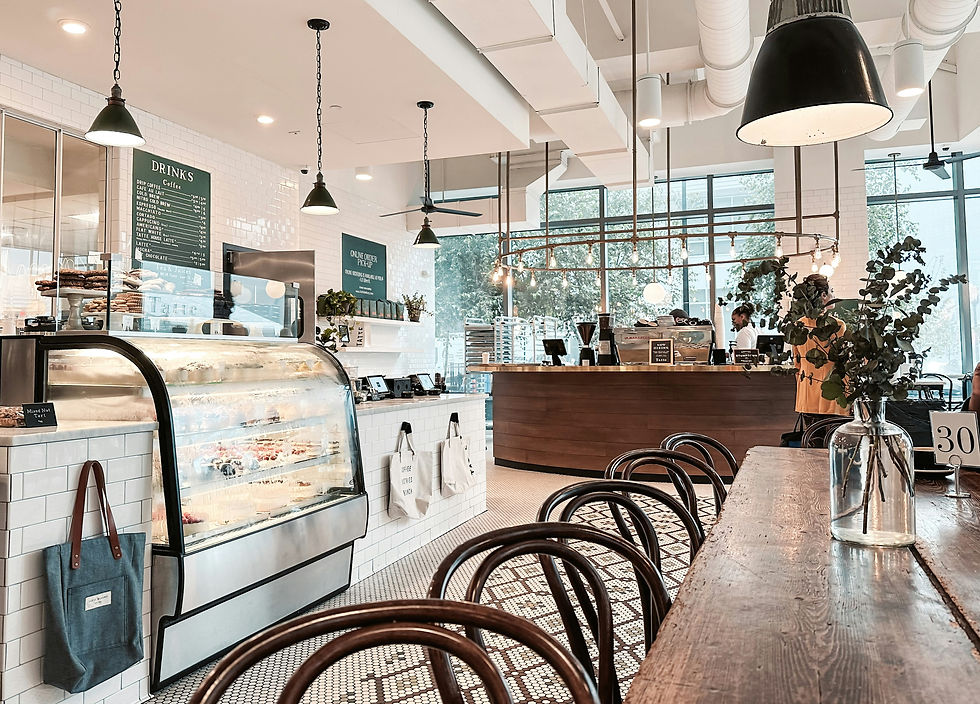
REAL WORLD EXAMPLE
Right now, you might walk into a café and think “I like it here.” After this subject, you’ll think: “I like it here because the ceiling is low and cosy, the warm wood tables create intimacy, the dim yellow lighting sets a calm mood, and the furniture is arranged so every table feels private.” Same feeling — but now you can NAME the design choices that created it. That ability to describe your spatial preferences with vocabulary is what separates someone who likes spaces from someone who can design them.
5
Everything from this subject gives you vocabulary: “I prefer open layouts with generous negative space and natural materials” is a spatial preference you can now articulate
REAL WORLD EXAMPLE
Before this subject, you might have said: “I like simple rooms.” Now you can say: “I’m drawn to open layouts with low furniture, generous negative space, natural wood and fabric materials, warm side-lighting, and clear flow paths between zones.” That’s the SAME preference, but expressed with design vocabulary. The second version can actually be used to brief an interior designer, plan a room, or build a mood board. Vocabulary turns vague feelings into actionable creative direction.

6
Your spatial voice connects to all the other Foundation voices: visual, typographic, and narrative — together, they form your emerging creative identity
REAL WORLD EXAMPLE
Think of a filmmaker’s style. Wes Anderson’s films are recognisable instantly: symmetrical compositions (visual voice), quirky hand-lettered titles (type voice), dry, funny storytelling (narrative voice), AND pastel-coloured, dollhouse-like rooms (spatial voice). All four voices work together to create one unmistakable creative identity. You’re building the same thing: your visual, type, story, and spatial voices will combine into a creative personality that’s uniquely yours.

7
Spatial awareness is a lifelong skill — the more spaces you experience with intention, the more refined your spatial voice becomes

REAL WORLD EXAMPLE
A food critic doesn’t develop their taste in one meal. They eat hundreds of different dishes over years, paying attention each time, comparing, remembering. Your spatial awareness works the same way. Every time you enter a new space — a friend’s house, a museum, a new city, a hotel lobby — and PAY ATTENTION to how it makes you feel, your spatial awareness gets sharper. In ten years, you’ll walk into any room and instantly read its design decisions. That skill never stops growing.
8
What if the space you eventually design, arrange, or influence — your room, your workspace, your someday home, or a professional project — reflects your unique spatial voice?

REAL WORLD EXAMPLE
Your camera roll reveals your visual voice. Your playlist reveals your music taste. And someday, the room you design, the workspace you set up, or the café you open will reveal your spatial voice. Every creative choice you make in a space — the materials, the layout, the lighting, the mood — will carry your personality. It starts now, with noticing what spaces you love and why. Your spatial voice is already forming. This subject just gave you the vocabulary and awareness to hear it clearly.
Pro Connection
When a portfolio includes spatial work — room layouts, floor plans, material boards, spatial photography — it reveals the designer’s spatial voice. Interior designers develop personal styles that attract specific clients. Architects are often known for a spatial approach: some design expansive, transparent buildings; others design intimate, material-rich spaces. Your spatial voice will continue to develop throughout the Foundation Program and especially into EYEAM programs like Interior Design, Experience Design, Environmental Design, and Spatial Planning.
PROFESSIONAL TERMINOLOGY
CLICK TO REVEAL and CLICK TO COVER
Your personal sense of spatial preference — the types of spaces that resonate with you and why
What is
SPATIAL VOICE
The qualities of space you're naturally drawn to: open/cosy, bright/moody, minimal/rich, natural/industrial
What is
SPATIAL PREFERENCE
The combination of all your creative voices (visual, typographic, narrative, spatial) that makes your perspective unique
What is
CREATIVE IDENTITY
The active habit of noticing how spaces are designed and how they affect your feelings and behaviour
What is
SPATIAL AWARENESS
THE SPACE FEELINGS DIARY
The calm you feel in a library, the energy of a busy street, the safety of your bedroom — none of that is accidental. Today you learn to read the design decisions that created those feelings.
what TO DO
Visit — or intentionally think about — 3 very different spaces today. Try to pick genuinely different ones: perhaps your bedroom, a shop or café, and an outdoor area.
For each space, ask yourself the same set of questions: How does this space make me feel? Is the ceiling high or low? Is it bright or dark? Open or enclosed? What materials and textures surround me?
Photograph each space.
Write a specific description for each using vocabulary from the capsule — not just "it feels nice" but WHY.
what TO SUBMIT
3 Photos | One photo per space — taken in a way that captures the spatial quality (a wide shot showing ceiling height, openness, or enclosure works best). |
Text | For each space: "[Space name] feels [feeling] because: ceiling is [high/low], it is [bright/dark], the space is [open/enclosed], and materials include [examples]." Then: "The space that most clearly has a deliberate design intent is [space] because [observation]." |
CHALLENGE
DISCOVERY
You can use these SOFTWARES for this Discovery Challenge
FREE SOFTWARE : Pinterest, Canva, PicCollage, Google Keep
PAID SOFTWARE : Moodboard, VSCO Membership