
SEQUENCES — IMAGES IN ORDER
One image is a moment. Two images are a comparison. Three images are a story. Put images in order and magic happens.
CORE CONCEPT
IMPORTANCE OF SEQUENCES — IMAGES IN ORDER
KEY KNOWLEDGE
1
A sequence is a series of images arranged in order to create narrative — the foundation of comics, film, storyboards, and carousels

REAL WORLD EXAMPLE
Think of the Tinkle or Amar Chitra Katha comics you’ve read. Each panel shows one moment, and when you read them left to right, top to bottom, a complete story unfolds. That’s a sequence. Instagram carousels work the same way: swipe to reveal the next chapter. Film works the same way: shot after shot after shot building a story.
2
The story lives in the space between images — the audience’s brain connects the dots and fills in what’s not shown

REAL WORLD EXAMPLE
Image 1: A kid staring at a high mango on a tree. Image 2: The same kid sitting under the tree, eating a mango, with a long stick lying next to them. What happened in between? You saw the kid knock the mango down with the stick. But that moment was never shown — YOUR brain created it. The story lives in the gap.
3
This is called “closure”: the mental process of filling in gaps between sequential images

REAL WORLD EXAMPLE
When you see a ball being thrown in one photo and a broken window in the next photo, your brain instantly creates the middle: the ball flying through the air and smashing the glass. You didn’t see it happen, but you KNOW it happened. That automatic gap-filling is called closure, and every comic artist, filmmaker, and content creator relies on it.
4
Key moments, not every moment: you don’t need to show everything, just the important beats that let the audience follow the story

REAL WORLD EXAMPLE
If you’re telling the story of making chai in photos, you don’t need 47 images of every stir. You need 4: water boiling, tea leaves going in, milk being poured, the final cup. Four beats. Four key moments. Your brain fills in the stirring, the waiting, the straining. Good sequences show the beats and trust the audience to fill in the rest.
5
Transitions between images create meaning: a jump from day to night implies time passing; a jump from one face to another implies they’re connected
REAL WORLD EXAMPLE
Photo 1: An exam hall, students writing. Photo 2: The same hall, completely empty, with sunset light coming through the windows. The jump from full to empty tells you hours have passed. You didn’t need a clock. The transition DID the storytelling. What you place next to what creates meaning — that’s the power of transitions.

6
Sequence order matters: rearranging the same images in a different order can tell a completely different story
REAL WORLD EXAMPLE
Three photos: a clean room, a messy room, and a person sleeping. Order 1: Clean → Messy → Sleeping = “They made a mess and gave up.” Order 2: Messy → Clean → Sleeping = “They cleaned up and rested.” Order 3: Sleeping → Clean → Messy = “They woke up and destroyed everything.” Same three photos. Three completely different stories. Order IS meaning.

7
Pacing is created by how many images you use and how much happens between them: more images = slower pace; fewer = faster pace

REAL WORLD EXAMPLE
A 10-panel comic where each panel shows one tiny step of opening a door: reach, grip, turn, push, crack, wider, wider, step, look, enter — that feels slow and suspenseful. A 2-panel comic: person standing outside, person inside — that feels fast and casual. More panels slow things down. Fewer panels speed things up. You control time with panels.
8
Sequences power: comic strips, graphic novels, film scenes, storyboards, Instagram carousels, product tutorials, and visual presentations
REAL WORLD EXAMPLE
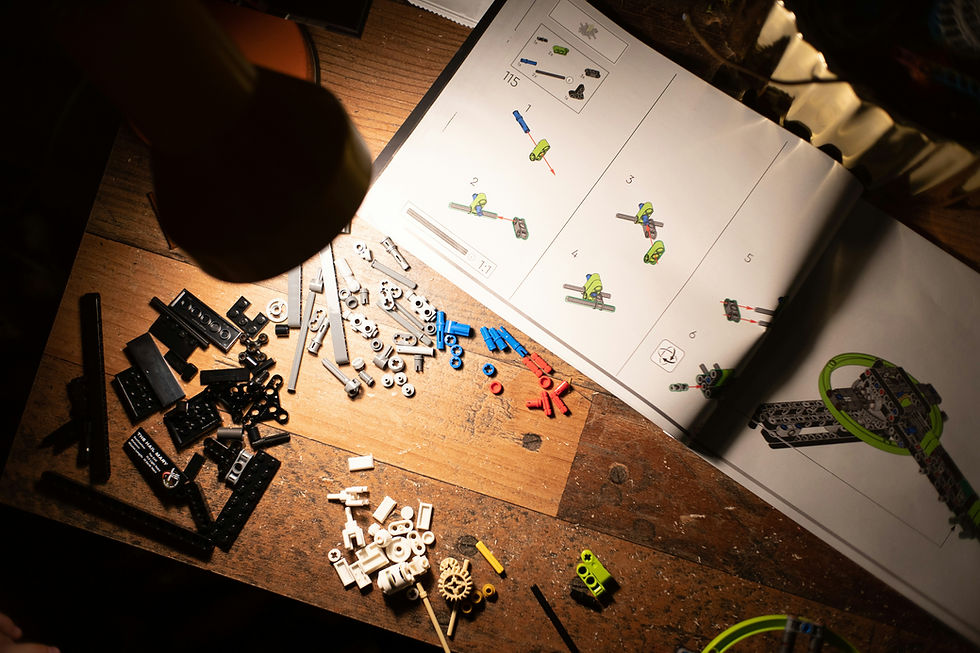
Your IKEA furniture instructions? A sequence. A recipe card with step-by-step photos? A sequence. A before-and-after fitness post? A 2-image sequence. A swipeable Instagram carousel? A sequence. Film? A sequence of 24 images per second. Once you see sequences, you realise they’re literally everywhere — the building blocks of all visual storytelling.
Pro Connection
Film editors talk about “the cut” — the transition between images that creates meaning. Comic artists design “panel layouts” that control pacing and story flow. Storyboard artists sequence key moments for films and animations. UX designers create “user flows” — sequences of screens that tell the story of someone using a product. Understanding sequences is understanding the grammar of visual storytelling.
PROFESSIONAL TERMINOLOGY
CLICK TO REVEAL and CLICK TO COVER
A series of images arranged in order to tell a story or show a process
What is
SEQUENCE
The audience's brain filling in the gap between sequential images — imagining what happened between frames
What is
CLOSURE
A single key moment in a story — the important points that the sequence must show
What is
BEAT
How one image connects to the next — the jump between moments that creates meaning
What is
TRANSITION
The speed at which a story unfolds — controlled by how many beats you show and how much time passes between them
What is
PACING
THE STORY FRAME
One photo. No words. A complete story that makes someone wonder what happened before and what happens next. Can you make it?
what TO DO
Take ONE photograph with your phone that tells a story — without any words.
It should make someone who sees it wonder: what happened before this moment? What happens next?
It could be a person doing something, an object out of place, a scene that implies something just happened, or an environment with a mood.
Show it to someone and ask them: "What story do you see?"
CHALLENGE
DISCOVERY
You can use these SOFTWARES for this Discovery Challenge
FREE SOFTWARE : Phone Camera, Canva, PicCollage, Google Keep
PAID SOFTWARE : Procreate Pocket, Canva Pro