
FOCAL POINT, FIGURE & GROUND
What if every powerful image is secretly controlling where your eyes go — and the space AROUND the subject is doing half the work?
CORE CONCEPT
IMPORTANCE OF FOCAL POINT, FIGURE & GROUND
KEY KNOWLEDGE
1
A focal point is the element that draws the viewer’s eye first — every effective visual has one

REAL WORLD EXAMPLE
Walk into any temple or gurudwara during aarti — dozens of people, flowers everywhere, smoke rising, bells ringing. And yet your eye goes straight to the flame. Every single time. That's not random — the flame is brighter, it's moving, it's at the centre. It's the focal point. Every great photo, poster, and film frame does the same thing — gives your eye one clear place to land first.
2
Five ways to create a focal point: size, colour, contrast, isolation, and position

REAL WORLD EXAMPLE
Think of a cricket field during a match. The pitch is tiny compared to the whole ground — but it's a different colour, it's at the centre, and it's isolated by empty green space all around it. Three out of five focal point tricks working at once, and nobody designed it as an art lesson. Once you know the five tools, you start spotting them everywhere — on billboards, in classrooms, even on your dinner plate.
3
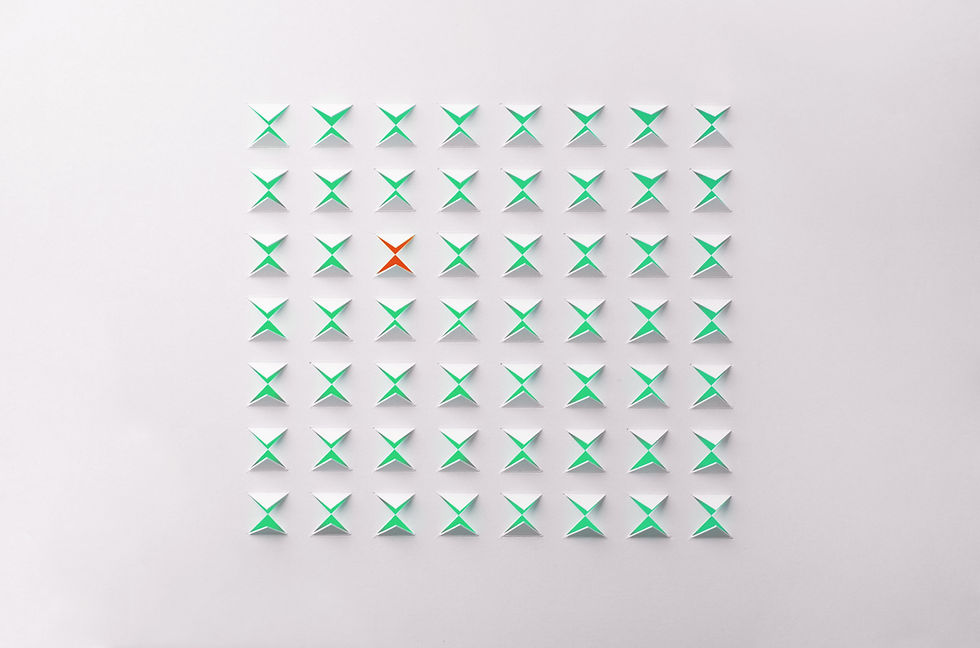
Visual weight describes how much attention an element attracts — bigger, brighter, or bolder = more weight
REAL WORLD EXAMPLE
Imagine a school notice board. Twenty white sheets pinned neatly — and one bright red one in the corner. Which one did you just look at in your head? The red one. It isn't bigger. It isn't centred. But it's bolder — and that gives it more visual weight than everything else on the board combined. Visual weight isn't about actual size — it's about what refuses to be ignored.
4
Figure = the subject. Ground = the background and surrounding space. They’re an inseparable team

REAL WORLD EXAMPLE
A kite in the sky. You see the kite — that's the figure. You see the sky — that's the ground. Now imagine that same kite lying on a blue bedsheet. Suddenly it disappears — because the figure and ground merged. They're a team: one can't work without the other doing its job. The subject gets the credit, but the background is doing half the work in silence.
5
Change the ground, and the figure feels completely different — even though you haven’t touched it
REAL WORLD EXAMPLE
Take a single marigold flower. Place it on a white marble floor — it looks festive, clean, elegant. Now place the same flower on a pile of wet mud — it looks abandoned, sad, like something left behind after a ceremony. The flower didn't change. Not one petal moved. But the story changed completely, because the ground rewrote it. Background isn't decoration — it's meaning.

6
Clear figure-ground separation = strong message. Weak separation = lost message
REAL WORLD EXAMPLE
Think of two shop signs on the same road. One has bold white text on a dark green board — you read it from across the street while walking. The other has yellow text on an orange board — you squint, slow down, and still can't tell if it says "Sharma" or "Verma." Same road, same size, same distance. The only difference: one separated figure from ground clearly, the other didn't. Message delivered vs. message lost.

7
Negative space (the empty space around subjects) is a powerful design tool, not wasted space

REAL WORLD EXAMPLE
Next time you see an Apple ad — for an iPhone, a MacBook, anything — notice how much of the image is just... empty. White. Nothing. And yet the product feels premium, important, worth staring at. That emptiness isn't lazy design. It's the most expensive real estate on the poster — carefully kept blank so your eye has nowhere to go except the one thing they want you to see.
8
What if the most elegant designs in the world are defined not by what they contain — but by the breathing space around it?

REAL WORLD EXAMPLE
Visit any old Zen garden photo — there's a rock, some raked sand, and... nothing else. Yet people travel thousands of kilometres just to sit and stare at it. Now think closer to home: a single diya placed on a clean doorstep during Diwali — no clutter, no decoration around it, just the flame and the space. The breathing room isn't absence. It's the thing that turns a simple object into something you want to pause and look at.
Pro Connection
Art directors talk about “where the eye lands” (focal point) and “giving elements room to breathe” (figure-ground). UX designers ensure buttons “stand out against the background.” Interior designers create “feature walls.” Filmmakers choose locations for how the background frames their actor. These are daily professional conversations.
PROFESSIONAL TERMINOLOGY
CLICK TO REVEAL and CLICK TO COVER
The first place your eye goes in any visual — the main point of attention
What is
FOCAL POINT
How much attention an element attracts — bigger, brighter, or bolder = more weight
What is
VISUAL WEIGHT
The main subject or element in a composition — the thing you're looking at = foreground
What is
FIGURE
The background or surrounding space behind and around the figure = background
What is
GROUND
The empty space around and between subjects — deliberately designed, not leftover
What is
NEGATIVE SPACE
The space occupied by the main subject or elements
What is
POSITIVE SPACE
When one element clearly overpowers others and becomes the focal point
What is
DOMINANCE
Making something stand out on purpose to show it's important
What is
EMPHASIS
A figure shown as a solid shape defined by its outline against the ground
What is
SILHOUETTE
How the subject and background interact and affect each other
What is
FIGURE-GROUND RELATIONSHIP
THE SPOT-5 GAME
You've walked past this room a hundred times — but have you ever actually seen it?
what TO DO
Look around the room or space you are in right now.
Find 5 things that you have NEVER paid attention to before - small details, shadows, textures, shapes.
Take one photo of your most surprising discovery.
Share your list with a friend or classmate. Ask them: did they notice the same things or different things?
Write your 5 things in simple words - even one line each is enough.
CHALLENGE
DISCOVERY
You can use these SOFTWARES for this Discovery Challenge
FREE SOFTWARE : Google Photos, Apple Photos / Samsung Gallery, Snapseed, Google Keep
PAID SOFTWARE : Adobe Lightroom Premium, Darkroom